Saturday, May 15, 2010

Book Review on "Where in the world is my team?"

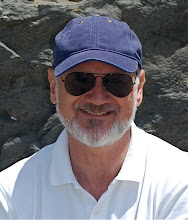
Check out this SlideShare Presentation:Where in the World is My Team? As you'll see from Slide 5, my virtual gym membership is really paying off!

Saturday, April 24, 2010

HIPerWall: Really Big Collaboration, Really Big!


Photo: Anne Helmond

I just learned about HIPerWall from John Sviokla's blog posting "It's Time to Reinvent Knowledge Work." You can access the blog here!.

The HIPerWall - or Highly Interactive Parallized Display Wall - is a spinoff from the University of California at Irvine (UCI, and is based on research and technology at UCI's California Institute for Telecommunications and Information Technology (Calit2). Basically, the HIPerWall's software, enables a very large electronic canvas for creating very large video walls out of standard computer, monitors, and an Ethernet network. John didn't mention the wall itself, but a link in his blog took me to an article about two Calit2 affiliated professors (Steven G. Potkin and James H. Fallon) who were using a wall to help them identify the genes associated with schizophrenia (something one of my sons is also working on, and so I was further intrigued).

The researchers had to try and find patterns in a huge amount of data that could help them connect the millions of dots into a genetic picture. The 200-million-pixel,40 by 10 foot wall gave them larger-than-life views of their data sets at very high resolutions. As the Calit2 article said, ". . . they could scrutinize multiple data set sets simultaneously, comparing and contrasting images while they rotated, dissected, spliced and superimposed them." The wall also facilitated collaboration with other researchers in cognitive science, physics, informatics, computer science, neuroanatomy, statistics and genetics. The data was dynamic, could be grouped in many ways (e.g., gender, severity of illness). Before such a high-tech visualization tool, researchers had to grind their way millions of data-gerated numbers.

Use of the wall led to the identification of two genes associated with schizophrenia, and the researchers are now investigating genetic risk factors for Alzheimers.

As John says in his blog, other organizations (such as businesses) need to learn from these labs and consider how their own knowledge workers and potentially high-value teams think together, use information together, innovate together, learn and re-learn together. Tools like the HIPerWall not only help generate new knowledge, they feed curious imaginations that will disturb and overturn existing paradigms,and so present us with new ways of seeing. As Einstein said, "Imagination is more important than knowledge." Imagination is where knowledge begins life.

To learn more about the HIPerWall you can visit here. You can also see a number of videos on YouTube, including ones where researchers are playing Guitar Hero 2 on the wall. Fun times!

Monday, April 5, 2010

Emerging Markets Are Pretty Developed on the Collaboration Front


In May 2009, Frost & Sullivan conducted an online survey of 3,662 Information Technology and line-of-business decision-makers in 10 countries in Asia-Pacific, Europe and the United States. The study - sponsored by Verizon and Cisco - wanted to find out how professionals work together using advanced collaboration tools. Here are some of the most interesting findings:

China is embracing unified communication and collaboration (UC&C) tools - 89 percent use some form of Voice over Internet Protocol (VoIP) as their primary phone service

India sees the biggest return on their collaboration investment They have the lowest average spend on UC&C, but the highest return on capital

India is the most telecommute-friendly country, followed by Hong Kong, and with the US and China third

China has the largest proportion of its firms currently having both desktop videoconferencing (69 percent) and immersive video (62 percent. India is second and the US third

Chinese organizations ranked first with the highest percentage of companies giving advanced collaboration tools to their non-management employees. The US ranked second and Australia third

Differences in regional perceptions are very interesting:

Asia-Pacific
Feel that communications technologies give them control over their lives, and allow for a better balance between life and work
Are most concerned about the security of their information
Like the ability to telecommute
Find the technologies are invalauble to help them stay in the loop and keep business moving forward

Europe
Like to work in the office, as opposed to working from home
Are least likely to multitask while on a conference call
Prefer in person meetings
Are least likely to disconnect from communications technologies in order to preserve their privacy

US
Highest percentage of all regions who believe that they lead busy professional lives
Readily substitute communications technologies for business travel
Like the ability to telecommute, and if possible, would do most of their work from home
Guard their privacy, often sending calls to voice mail or disconnect instant messaging so as not to be disturbed

The global collaborative infrastructure continues to develop at a rapid rate. Unfortunately,work cultures usually drag behind for many years, and so the value-generating potential at the Talent-Technology interface remains just that - potential. But, let's change that!

Wednesday, February 17, 2010

The Web is . . .


I am a great admirer of the BBC. Born into a working class family in England, and attending not-so-stellar schools, a good deal of my education came from BBC programming. I learned recently that the BBC is trying something different. They are producing a documentary on the story of the World Wide Web with the working title of Digital Revolution. The plan is to create an open source documentary, meaning it is opening up the production process as much as possible. Everyone is invited to join the process of answering the question 'The Web is . . .?' Not that there can be one answer, of course.

Everything about the production is a work in progress - from the thinking, the website, and even the program title. The production team will be blogging and sharing their thinking as the project moves forward, and even putting up rushes from the filming. Throughout the process, the team will be seeking advice and asking for stories from those who join in.

Want to join in? Click here!

Tuesday, December 8, 2009

Talkin' 'Bout Our G...G...Generations: The Hip and the Sage


You probably know that there are currently four generations functioning side-by-side in today's workplace. I use the term 'functioning' loosely because much of what I read about generations fits into the 'WhineLit' genre - "Who are those people!!!!". Not so with Lisa Haneberg's new book Hip & Sage: Staying Smart, Cool and Competitive in the Workplace (Nicholas Brealey, 2009). Lisa's ambitious goal is to catalyze a revolution - "There is nothing so powerful and transformative as a strong partnership and collaboration between our sages and our youths." Her view is that those professionals who nurture hipness and sageness will have a competitive advantage over those that don't.

What does it mean to be 'hip' and or 'sage'?

Hipness is an ability to communicate, connect, and collaborate with those in younger generations. It is a key factor in one's ability to engage and influence younger workers like the Millenials.

Sageness is our natural strengths and characteristics, goals and priorities, and experiences that show up in our skills, drive, judgment, and knowledge.

Hip & Sage isn't just a philosophical text on the need for the generations to learn from one another. It's also very practical with lists, worksheets, web resources, reflective questions, and examples to guide the way. I particularly like the section where she asks us to reflect on how our beliefs fuel our behaviors and our ability to change. I also like where she talks about collaboration - as opposed to participation - and how it is as much a mind-set as a set of actions.

The book begins with the wonderful story of how the veteran singer Tony Bennett came to collaborate with the relative youngster k.d. lang. They were both backstage at a Grammy show and he simply walked over to her and said, "I'm Tony Bennett and someday I'd love to sing with you." How many of us Boomers can walk over to a young Millenial and say, "Please teach me about social networking." The world is changing much too fast to try and learn everything by ourselves.

Check out her book, and also visit her Hip & Sage website
here

Saturday, November 7, 2009

How Long Before the Virtual Smile Scanner?


I read an interesting piece in the U.K.'s Guardian newspaper today about a Japanese train company that is scanning employee faces to see if they smile properly. The smile scanning software is used to make sure that employees are greeting passengers with enough enthusiasm.

Every morning, employees smile into a camera attached to a computer. The smile is analyzed in terms of factors like eye movement, lip curvature, and facial wrinkles. A smile is rated on a scale of 0 (suicidal) to 100 (delirious).

Advice is given to those who need it - "You are too serious," "Lift up your mouth corners". An ideal smile will be printed out for the employee to carry around as reference during the day.

They do say that when a person smiles on a telephone call, you can hear the smile in the person's voice. It certainly doesn't do any harm to smile when you're writing an email or an instant message. A smile does have enormous communicative power. But do I want the webcam sitting on my computer screen to scan my face each morning and print out an ideal smile for me? Nah!

Friday, October 30, 2009

What To Look For When Hiring People To Work Virtually


Yes, that's a picture of me working virtually in what I call Attic World - my real world office. I don't look my jolly old self because I probably haven't spoken to anyone on my virtual team in days. That can be the nature of some virtual work.

While there is no one profile for an effective virtual team member, we can, I believe, point to some very desirable characteristics. The following set of characteristics - that I first introduced in Where in the World is My Team? - can help guide recruitment, interviewing, training and development,and coaching and feedback. Ironically,given that we are talking about the new workplace, I call the framework TRADITIONS. While the new virtual workplace is different in some ways from the old, we don't need to throw out what we have valued before in our people, and start again.

Technological Competence
High comfort level with available collaborative tools
Ability to select and use the right technology for the right objective
Ability to troubleshoot and fix small technical problems
Ability to stay calm and not panic when technology fails
Understands when not to use techology

Results Orientation
Ability to stay highly focused on the virtual team's purpose and goals
Is not satisfied with just being busy, but wants to add value
Is highly self motivated to get things done despite the challenges of distance

Accountability
Has a strong work ethic
Takes personal responsibility for completing own tasks without continuous supervision
Sets high standards for own work
Doesn't free-ride on the work of others on the virtual team
Reconciles the needs and priorities of the team with local demands

Discipline
Avoids procrastination
Establishes personal routines and systems for managing own work efficiently
Follows processes and uses tools agreed to by the team
Minimizes disruption to others on the team by, for example,keeping all promises

Initiative
Spots problems early and acts proactively
Doesn't always wait for permission to fix a problem for the team
Shows great willingness to present ideas and solutions

Time Management
Responds to others on the team in a timely way
Meets deadlines and commitments
Manages workload and doesn't become overextended

Interpersonal Effectiveness
Connects with others through engaging conversations
Has ability to develop and maintain trusting relationships across distances via technology
Understands that distance can give rise to many misundertandings and demonstrates patience
Communicates clearly and precisely
Can sense and respond to the feelings and needs of others even though working at a distance
Listens very carefully to others and gives well thoughtout responses
Works hard to be constructive when things get tense

Openness
Welcomes ideas from everyone and everywhere
Demonstrates curiosity and a learning mindset
Shows a great willingness to share knowledge and skills across the team
Shows adaptability to change

Networking
Understands the importance of relationships to getting things done
Reaches out to others - internally and externally - to help build team capability
Maintains a high presence level with other team members; stays in close contact

Self Sufficiency
Works well in relative isolation with little direct supervision
Can tolerate ambiguity and uncertainty and keep going
Takes responsibility for own personal development

While it's not a polished and finely-tuned framework, it can function as a starting point for understanding the virtual worker.